

We’re living in a time of transition. In a time where pandemics, globalisation, climate disasters, democratic crises, conflicts, digitalisation, and new working conditions cause constant change, everywhere, all the time.
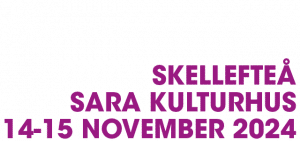
On the Swedish Forum for Human Rights in Skellefteå, the 14th-15th November, we will explore how our lives and societies are affected by all the transitions we undergo. Locally, as well as globally. The Forum will lift challenges we face, but also highlight positive examples and hopes for the future. How do transitions affect human rights? Do we need new regulations, new rights? Can everyone afford to transition? Does everyone want to?
Societal transition implies a society transitioning or changing to meet new requirements, challenges, or goals. For transitions to lead to a sustainable society where all humans’ fundamental needs and rights are met, without compromising future generations’ possibilities to meet theirs, it is crucial to set conscious goals and foster cooperation between different sectors.
In northern Sweden, the city Skellefteå as well as several other towns are undergoing extensive transitions. During the 2020’s, Skellefteå is expected to become one of Sweden’s leading growth-zones due to its new industrial projects and growing population. Simultaneously, new challenges emerge such as ensuring recruitment of competent labour and tackling housing shortages. How can we build socially and economically sustainable societies where all citizens feel involved and welcomed? Where new residents feel safe, included, and are granted their rights? How can we give the voices of our youths more space and how are children’s human rights ensured in the transition?
Are the world’s wealthy countries prepared to alter their growth targets and promote degrowth in order to save the climate?
Major transitions are required to fight climate change. But we need to ensure fair transitions that do not occur at the expense of our human rights. Whose interests are prioritised when metals that can accelerate the climate transition are found on land belonging to indigenous people? What happens if investments in climate transitions turn out to be unsuccessful? Who is responsible for an increased climate migration? Are the world’s wealthy countries prepared to alter their growth targets and promote degrowth in order to save the climate?
The democratic system is also in transition. Democracies are becoming autocracies, and the democratic space is shrinking in Sweden and globally. Polarising political policies undermine freedom of press, and civil society. Activists are at risk, freedom of religion is questioned, indigenous people and minorities are discriminated and vilified. In multiple countries we are witnessing a backlash against gender equality and LGBTQI rights. The right to asylum is being restricted despite an increased number of refugees due to wars, climate change, and poverty. What is needed to turn the negative development around? How can we safeguard all individuals’ equal value and ensure the independence and survival of our civil societies?
Whilst international alliances are becoming more important and more common, a global military rearmament is occurring
Globalisation has united people and paved way for transnational solidarity. In 2015, the world united upon the 17 goals of the 2030 Agenda for Sustainable Development. Yet halfway there, only 15 percent of the milestones are on the right track. How can societal transitions contribute to achieving the goals? Whilst international alliances are becoming more important and more common, a global military rearmament is occurring. Conflicts are taking the lives of thousands around the world, homes, schools, and hospitals are being destroyed and people are forced to spend prolonged periods of time in refugee camps, without access to fundamental rights. How does militarism affect human security and human rights? How can we work towards making human rights an integral part of crisis and war preparedness?
Digitalisation has compressed our sense of time and space and simplified many aspects of our daily lives. It has provided new opportunities for social movements to organise, for people to join communities where they feel accepted, and has made knowledge more accessible. However, not all groups are able to keep up with the transitions brought on by digitalisation. And a growing number of people are warning about the consequences of rapid AI development, fake news, surveillance algorithms, desocialisation, and deteriorating mental health. How can technological development instead aid in fulfilling our human rights, and how can we ensure that everyone can partake in it? What threats and opportunities does AI pose for the right to education, work, and culture?
We now invite your organisation to contribute to the programme on how to strengthen human rights in times of transition. There are many challenges, but together we can find the solutions. Share knowledge, debates, methods, hopes for the future, and good examples from your organisation. At the largest forum for human rights in the Nordic region, you can partake in shaping the public opinion on the most pressing issue of our time!
*Unfortunatley, a majority of the information on this page
is written in Swedish. Do not hesitate to contact us for
information in English and guidance through the process!